Monthly Weekly Budget Planner Log Book: A Practical Tool for KDP Publishers and Planners
The Monthly Weekly Budget Planner Log Book is a purpose-built interior template designed specifically for creators publishing low-content or no-content books on Amazon KDP. Unlike generic budget journals or printable PDFs, this resource combines functional financial tracking with production-ready design specifications—making it especially valuable for those building a scalable KDP business around planner-style products.
What Sets This Monthly Weekly Budget Planner Log Book Apart
At its core, the Monthly Weekly Budget Planner Log Book delivers 100 pages of editable, vector-based layouts optimized for both usability and print compliance. Its distinction lies not just in content structure—but in technical readiness. Each page is built using Adobe Illustrator-compatible EPS files, allowing publishers to resize, reformat, or adapt layouts without pixelation or quality loss. That vector foundation supports multiple trim sizes—including the widely used 6×9 inches—while maintaining crisp lines and clean typography at 300 DPI.
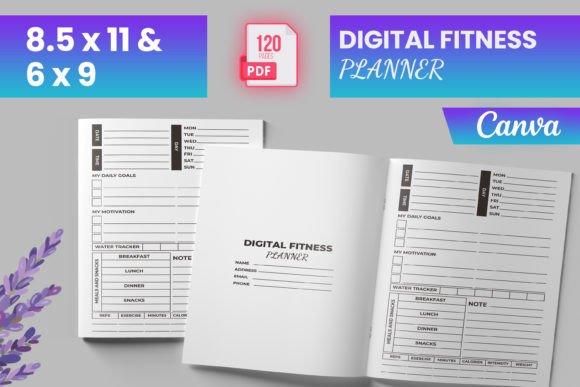
It also includes three page count variants (100, 110, and 120 pages), offering flexibility depending on binding preferences or target market expectations. The absence of bleed simplifies KDP upload workflows, reducing the risk of formatting errors during preview or approval. Bonus assets—such as transparent-background PNGs and high-resolution JPGs—support promotional use, cover mockups, or social media previews without additional design overhead.
How It Compares to Other Budget Planning Resources
Many budget planners on the market fall into one of two categories: fully illustrated digital journals meant for personal use, or rigid, non-editable templates sold as static PDFs. The Monthly Weekly Budget Planner Log Book occupies a middle ground—designed for resale, yet structured to serve real planning needs.
Compared to free printable budget sheets found online, this interior offers consistency in layout, professional spacing, and intentional white space—all critical for readability and perceived value. Free resources often lack standardized margins or KDP-compliant dimensions, requiring manual adjustments that increase time-to-publish and risk rejection.
When contrasted with premium Canva-based or Notion-linked budget trackers, the Monthly Weekly Budget Planner Log Book trades interactivity for immediacy and ownership. There’s no subscription, no login, and no dependency on third-party platforms. Once downloaded, the files belong entirely to the publisher—enabling bulk uploads, branding integration, or iterative redesign across multiple titles.
Strengths for KDP Publishers Building a Portfolio
For those growing a KDP low-content business, scalability depends on repeatability and speed. The Monthly Weekly Budget Planner Log Book supports that goal through several practical features:
- Editability: EPS and layered PDF files allow easy customization—changing fonts, colors, headers, or even adding logos without starting from scratch.
- KDP-tested compliance: Files were uploaded and verified on Amazon’s platform, meaning margins, resolution, and file structure align with current KDP requirements—reducing guesswork and revision cycles.
- Format versatility: Ready-to-print PDFs work for paperback; the same vector assets can be adapted for hardcover interiors or even digital planner versions (with appropriate licensing).
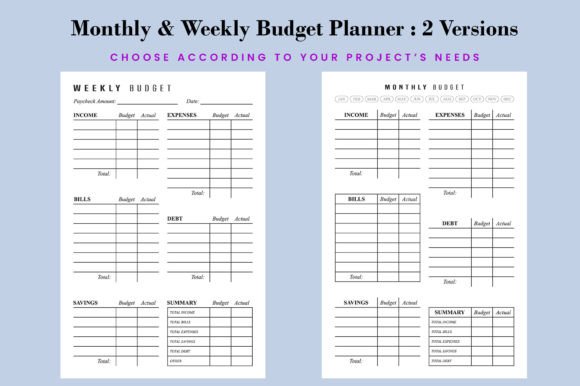
- Time savings: No need to source or license individual icons, charts, or grid systems—the interior includes consistent weekly spreads, monthly overviews, expense trackers, and summary pages already laid out.
This makes the Monthly Weekly Budget Planner Log Book particularly effective for publishers launching multiple planner variations—such as seasonal editions, niche-specific versions (e.g., student budgeting, freelance income tracking), or companion workbooks.
Realistic Tradeoffs and Considerations
While technically robust, the Monthly Weekly Budget Planner Log Book assumes a baseline level of familiarity with design tools. Users expecting drag-and-drop editing in Word or Google Docs may find the EPS and Illustrator reliance a barrier. Those without access to Adobe Creative Cloud—or who prefer browser-based editors—may need to convert files first, potentially losing some vector fidelity.
It also prioritizes function over novelty. You won’t find animated elements, embedded calculators, or AI-generated summaries. If your audience expects interactive features or highly stylized illustrations (e.g., watercolor textures, hand-drawn motifs), this interior serves as a strong structural base—but will require supplemental design work to match those aesthetics.
Additionally, while the 6×9 trim size fits common KDP expectations, it may not suit every reader preference. Some buyers favor smaller formats like 5×8 for portability, or larger ones like 8.5×11 for detailed tracking. Adapting the interior to alternate sizes is possible—but requires testing for text legibility and grid alignment.
Best-Fit Scenarios for Using This Planner Interior
The Monthly Weekly Budget Planner Log Book works well when:
- You’re launching your first budget planner title and want a proven, compliant starting point—rather than designing from zero.
- Your workflow involves batch-publishing similar titles (e.g., “Monthly Budget Planner for Teachers,” “Weekly Expense Tracker for Freelancers”) and you need consistent, adaptable layouts.
- You value long-term asset control—owning editable source files means updates, corrections, or repurposing remain under your authority.
- Your target audience prefers straightforward, no-frills planning tools over heavily branded or themed journals.
Conversely, consider alternatives if:
- You’re focused on digital-only distribution (e.g., Notion templates or Excel-based tools) where static PDFs offer limited utility.
- Your niche demands heavy visual storytelling—like illustrated finance guides or children’s money journals—where layout flexibility matters less than original artwork.
- You need integrated functionality such as automatic calculations, cloud syncing, or recurring entry reminders—features outside the scope of static print interiors.
Making an Informed Choice Among Budget Planning Tools
Evaluating the Monthly Weekly Budget Planner Log Book isn’t about declaring it “the best” budget planner—it’s about assessing fit. For KDP publishers aiming to reduce friction between idea and publication, its combination of editability, compliance, and modularity delivers tangible efficiency. For end users seeking simplicity and reliability in their personal finance practice, its clean structure and logical progression—from weekly line items to monthly summaries—support habit formation without distraction.
That said, effectiveness depends on how it’s used. A well-designed interior still benefits from thoughtful cover design, accurate keyword targeting, and realistic customer expectations. The Monthly Weekly Budget Planner Log Book provides the engine—but success hinges on how thoughtfully the rest of the publishing system is assembled.
In practice, many successful KDP planners begin with a resource like this, then iterate based on sales data and customer feedback. Early versions might test different page counts or header styles; later editions could integrate new sections—like debt payoff trackers or income diversification logs—using the same vector framework. That capacity for measured evolution is part of what makes the Monthly Weekly Budget Planner Log Book a durable foundation rather than a one-time solution.